
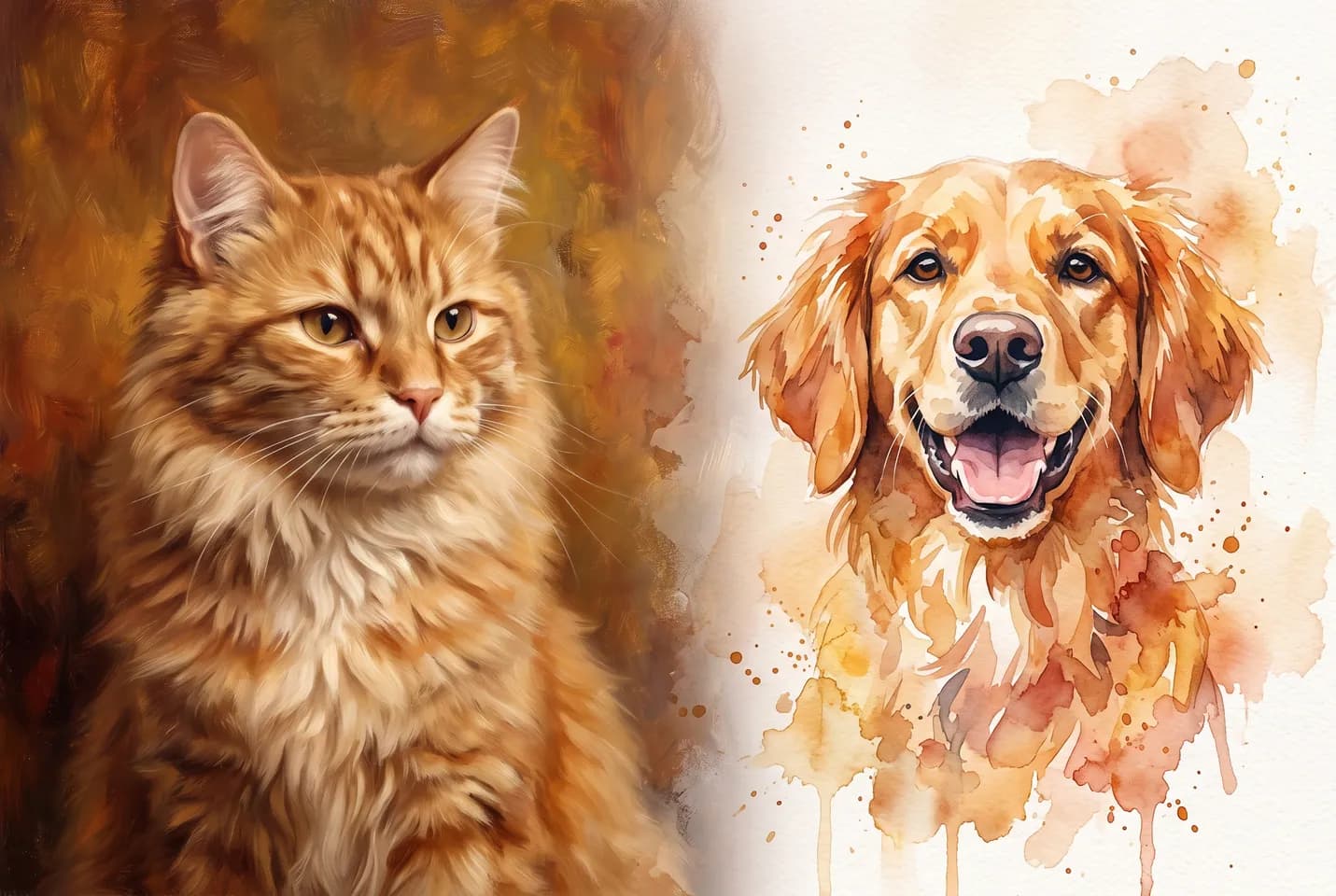
Pet portrait ideas work best when the style fits both the animal and the room. Try watercolor for a gentle feel, pop art for bright color, or a formal royal portrait for affectionate comedy. Each idea below includes a prompt you can adapt for a dog or cat. CanvasGenie can start from a written description or use an uploaded photo as a reference to create a painted interpretation. The photo is not printed unchanged, and either approach can alter details.
What styles work for a dog or cat portrait?
These twelve directions cover traditional painted pet portraits, simple graphic looks, and playful scenes. Replace the bracketed words with details that matter to you, such as “black cat with a white chin” or “sleepy golden retriever.” Adobe's guide to writing image prompts recommends describing visual details such as mood, style, and lighting; those details give each prompt a clearer direction.
| Style | Prompt to adapt | Room that may suit it |
|---|---|---|
| Watercolor | “A loose watercolor portrait of a [pet], soft edges, warm cream paper, calm expression.” | Bedroom, reading nook, or a soft-colored living room |
| Oil painting | “A painterly oil portrait of a [pet], rich brush texture, deep green background, thoughtful pose.” | Study, dining room, or traditional living room |
| Pencil sketch | “A graphite drawing of a [pet], fine fur detail, simple white background, gentle side light.” | Hallway, office, or a small gallery wall |
| Ink illustration | “A black ink portrait of a [pet], clean expressive lines, a few loose marks, lots of white space.” | Minimalist room or home office |
| Pop art | “A bold pop-art portrait of a [pet], flat blocks of coral, teal, and yellow, playful expression.” | Bright living room, game room, or creative workspace |
| Mid-century graphic | “A mid-century modern portrait of a [pet], geometric shapes, muted rust and mustard palette.” | Living room with warm wood or vintage accents |
| Folk art | “A folk-art portrait of a [pet], decorative flowers, patterned border, hand-painted feel.” | Kitchen, entryway, or cottage-style room |
| Storybook | “A storybook illustration of a [pet] curled beside a window, soft afternoon light, cozy details.” | Nursery, bedroom, or reading corner |
| Minimal line art | “A spare continuous-line drawing of a [pet], distinctive ears and profile, pale background.” | Small wall, gallery grouping, or modern office |
| Vintage photograph | “A softly aged studio portrait of a [pet], sepia tones, subtle paper grain, composed pose.” | Study, hallway, or room with antique details |
| Royal portrait | “A dignified oil-style portrait of a [pet] wearing a small velvet collar and crown, ornate dark backdrop.” | Entryway, dining room, or anywhere the joke can have a little ceremony |
| Noir | “A dramatic black-and-white portrait of a [pet] as a detective, hard side light, rainy city shadows.” | Den, office, or media room |
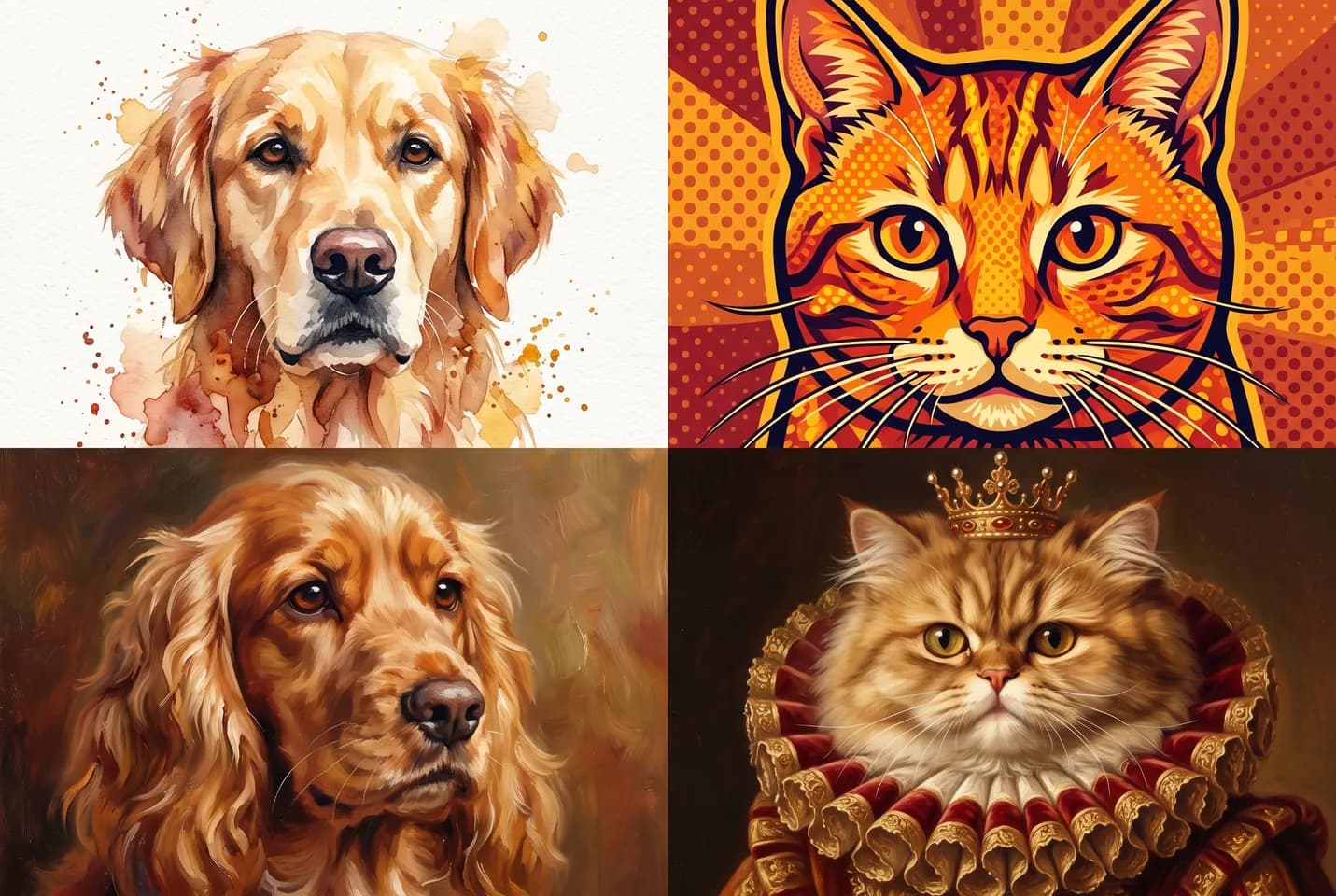
These room pairings are starting points, not rules. Match the background and palette to colors already in the room, then check the canvas size guide before choosing a print size.
For a cat, I would start with watercolor, ink, or an old-master look if you want a quiet, dignified portrait. If your cat has a comic streak, pop art or a playful costume may fit better.
How do I make the portrait funny or royal?
Give the joke one clear idea. A crown, an oversized uniform, a detective's coat, or an over-serious expression is usually enough. If you pile on props and scenery, the pet can get lost in the bit.
Try these prompt variations:
- Royal: “A stately royal portrait of my orange tabby, tiny gold crown, velvet robe, serious expression, muted oil-paint palette.”
- Noir: “My small terrier as a detective in a noir film, trench coat, dramatic monochrome lighting, alert ears.”
- Superhero: “My senior beagle as a gentle neighborhood superhero, simple blue cape, warm comic-book colors, kind expression.”
- Everyday absurd: “My sleepy cat as a very serious museum curator, tiny glasses, neat jacket, plain studio backdrop.”
For a funny portrait, use a recognizable pet detail and one unexpected role. The Metropolitan Museum of Art describes Louis-Auguste Bisson's daguerreotype of a dog as humorously presenting the pet as if in his doghouse, a reminder that a familiar setting can be part of the joke too. See Bisson's dog portrait at The Met.
What should I expect from a description or photo?
A text prompt can describe species, coat color, markings, posture, mood, clothing, and setting. It cannot show the generator the exact face of your pet. Add details that distinguish your animal, but expect an interpretation rather than a faithful copy.
With photo reference, the generator uses the uploaded image as a starting point for new painted artwork. The result may change markings or other details, so review it before ordering. CanvasGenie does not promise an exact likeness, and the uploaded photo itself is not the print file. For more on the photo workflow, see the pet portrait canvas guide.
How do I choose a portrait style for the room?
Start with the room's mood and the portrait's job. A calm watercolor can sit quietly among other art; a crown or superhero costume asks to be noticed. If you want one portrait to anchor a wall, choose a style with a strong silhouette and a background that leaves the pet easy to see.
For a pair or gallery wall, keep one element consistent, such as the background color or illustration style. Before settling on a size, measure the open wall and compare it with the available options in the canvas size guide. You can also see AI pet portrait prompts for dogs and cats for more detailed descriptions to start from.
What should I check before ordering?
Review the generated art at full size before choosing a print. Check the eyes, ears, paws, coat pattern, and any text or costume details you asked for. If something feels off, revise the prompt or try another style, then inspect the new result.
When you're happy with the artwork, choose a product and size that fit the wall. The pet portrait canvas page explains the photo and description options, and canvas size guide lists product sizes. Delivery estimates can change by destination and order, so check the current shipping information when planning around a date. For the steps from generated artwork to a finished print, read how to print AI art on canvas.